How Informal Football Matches Settle Disputes Without a Referee
Informal football match rules can keep a game moving: agree how to handle close calls, share responsibility and make decisions players can accept.
Informal football match rules work best when players agree how to settle close calls, not when they try to copy an official rulebook. A brief, shared method lets a game in a fenced court or public park keep its own character while giving everyone a fair way to speak up.
Shared decisions
Without a referee, players take turns making decisions that affect the game. That arrangement can work when everyone knows how to raise a concern and what happens if accounts differ. It becomes strained when one person’s view is treated as final simply because they speak first or play for the stronger side.
Agree on a simple process before play starts: describe the action, let the other side respond, then use a neutral restart if the call remains unclear. This is not a search for perfect certainty. It is a way to prevent an ordinary disagreement from becoming a contest over who has more authority.
Agree on a process
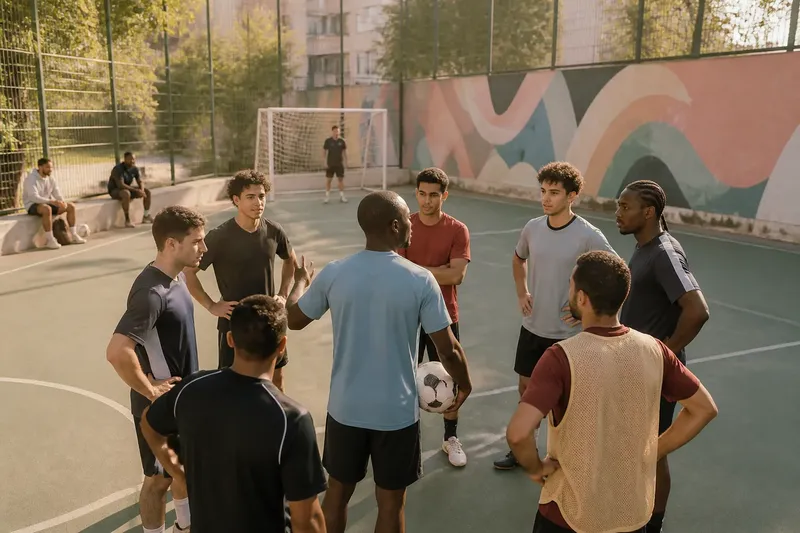
Keep the agreement focused on how players discuss decisions, rather than trying to settle every local rule. A short conversation can cover these practical checks:
- Who speaks first: Check whether the nearest player can describe the incident without interruption; if that works, let them explain, but if not, ask each side for one brief account.
- How long to discuss: Check whether the exchange stays focused on what happened; if players repeat accusations, pause the debate and use the agreed neutral restart instead.
- Who decides an unclear call: Check whether both sides accept the proposed decision-maker; if they do not, use a restart that does not award the disputed advantage to either side.
- How to raise a safety concern: Check whether a player can ask for play to stop; if they can, pause and address the concern, but if the behaviour continues, stop the game rather than pressuring them to carry on.
- How to bring in newcomers: Check whether new players know how to question a call; if they do, include them in the same process, but if they seem unsure, explain it before restarting.
- When to revisit the agreement: Check whether the same dispute returns; if it does, clarify the process before the next restart, but if it does not, leave the game’s working arrangement alone.
Give each person a chance to describe what they saw, then move on to the decision. Like passing a note around a table, the exchange works better when everyone knows whose turn it is and when the discussion ends.
Handle close calls?
What should happen when players disagree?
Ask each side for a short account of the action, without turning it into a judgement of anyone’s character. If the accounts remain different, use the neutral restart agreed beforehand and resume play.
How can a new player raise a concern?
Tell newcomers before kick-off that they can question a decision and explain the group’s process in plain language. If they raise a concern during play, hear it on the same terms as everyone else.
When should players stop the game?
Pause if the disagreement keeps interrupting play or someone says the contact feels unsafe. If a brief conversation does not resolve a safety concern, players can end the match rather than treating continuation as an obligation.
Should one player make every close call?
A single decision-maker can be convenient, but repeated calls by one person may leave others feeling unheard. If that becomes a problem, rotate the role or use a neutral restart for disputed incidents.
A worked decision
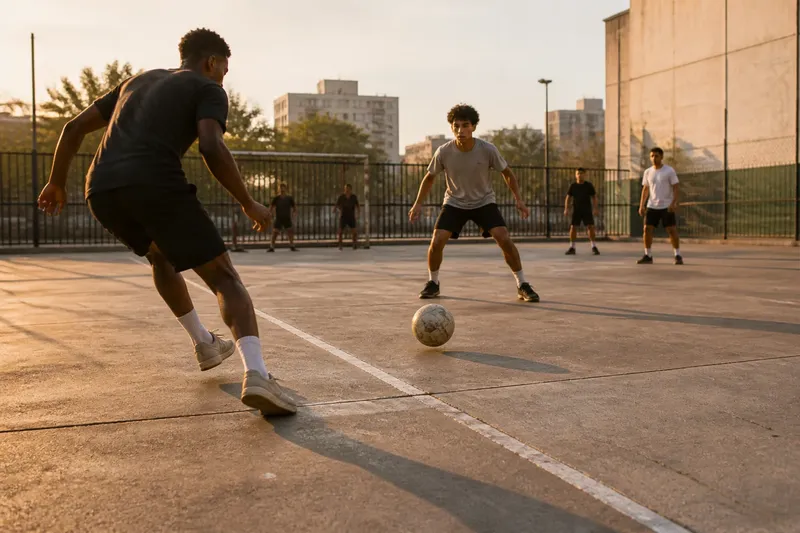
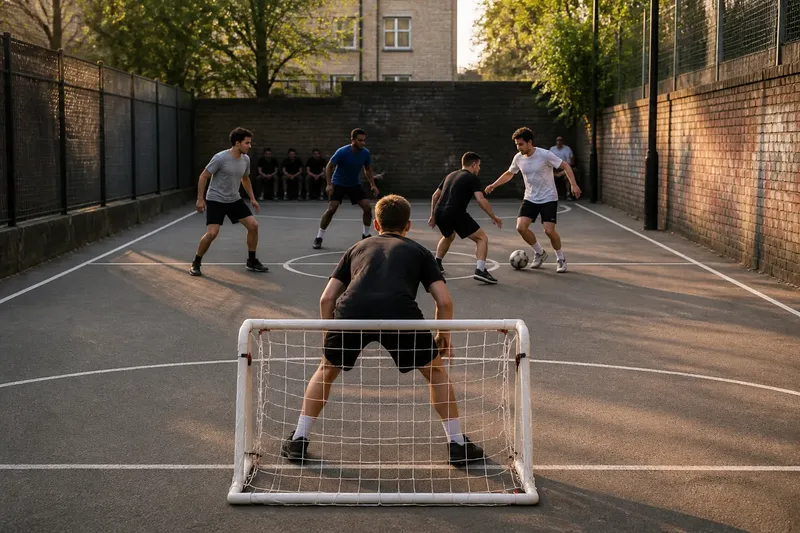
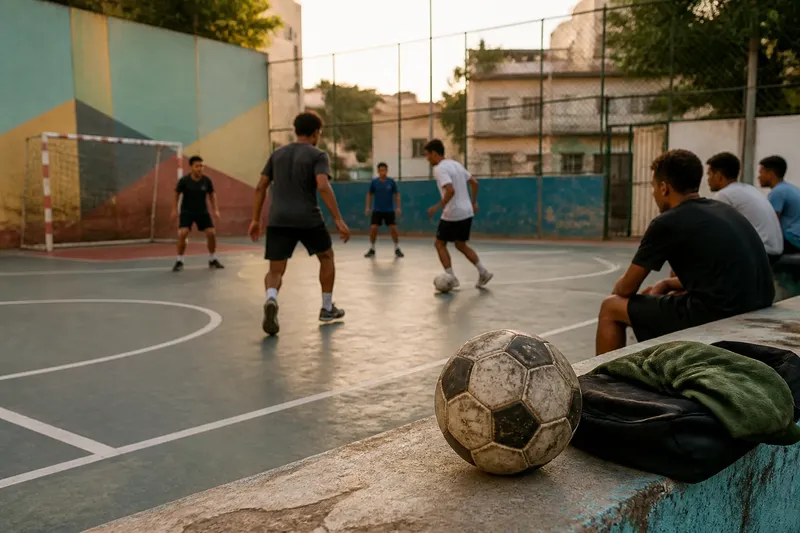
Imagine a park game with two teams, one ball and no designated referee. Before kick-off, the players agree that each side gets one short account of a disputed incident; if those accounts conflict, they will restart neutrally rather than award possession to either team.
During play, a player falls after contact and asks for a foul. Their opponent says the contact was shoulder-to-shoulder. Each gives a brief account, neither changes their view, and the players use the agreed neutral restart. The observable result is a clear return to play without asking either side to accept the other’s version as fact; the trade-off is that the player who might have won a foul does not receive that advantage.
When the process fails
Repeated arguments suggest that the method is not working for this group, even if nobody means to dominate a decision. Notice whether the same person is routinely talked over, whether calls seem to favour one side, or whether a player cannot raise a safety concern without being mocked.
Pause the game and change the process if needed. You might give each side one speaker, rotate who handles the next close call, or agree that an unresolved incident leads to a neutral restart. If someone continues to feel unsafe or ignored, stopping play is more important than preserving its rhythm.
Written agreements
A spoken agreement is often enough for a familiar group. A brief note on a phone can help when players are new to each other or a dispute keeps recurring; write down the procedure, not a catalogue of every possible incident.
Informal football match rules should be easy for everyone to understand and use. A fair process does not make every call unanimous, but it gives players a shared way to disagree, decide what happens next and keep the game open to the people who want to join.